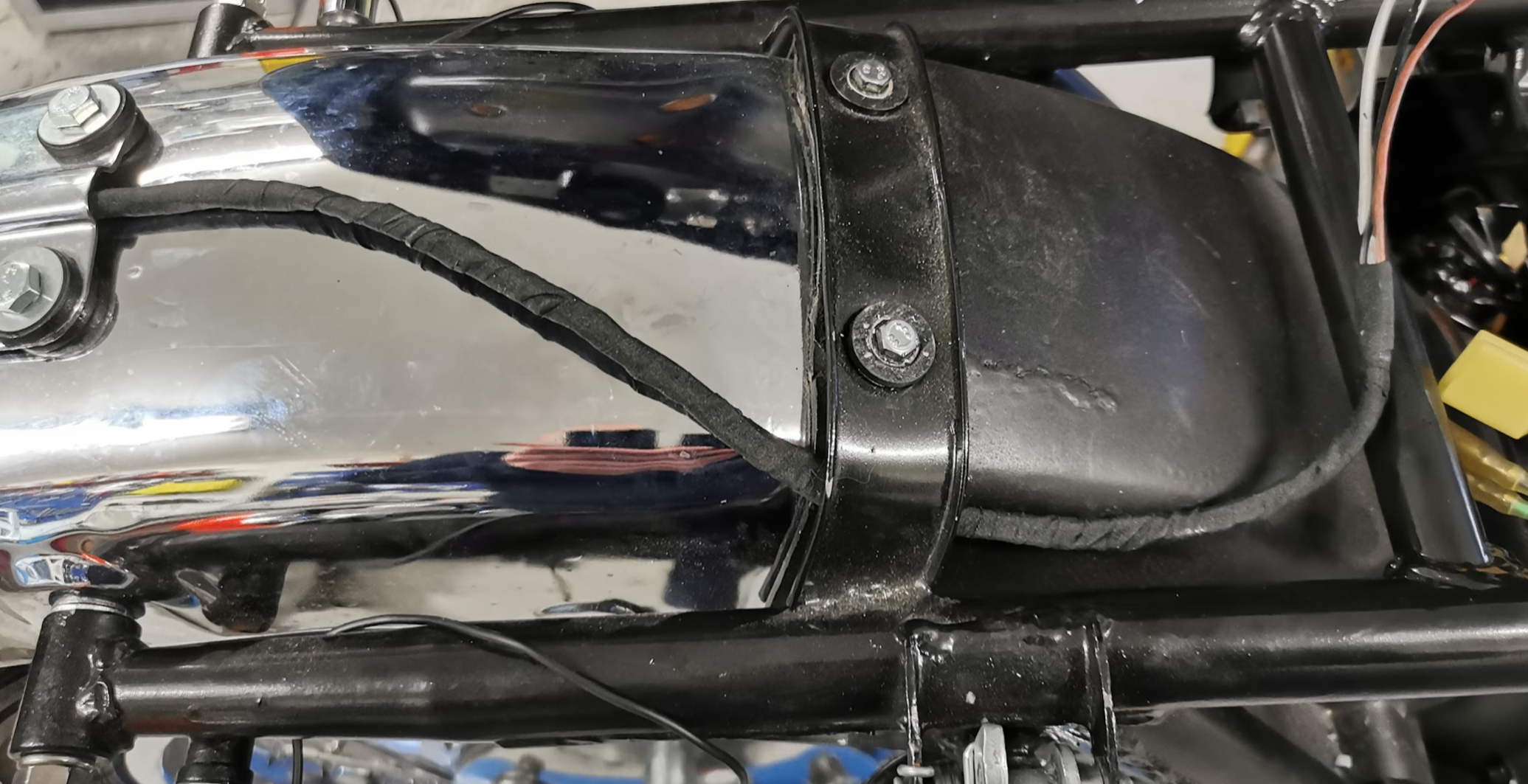
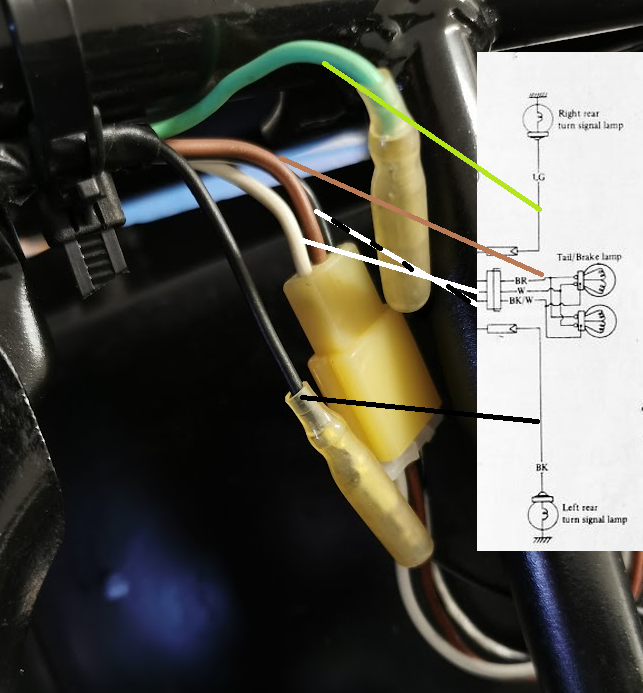
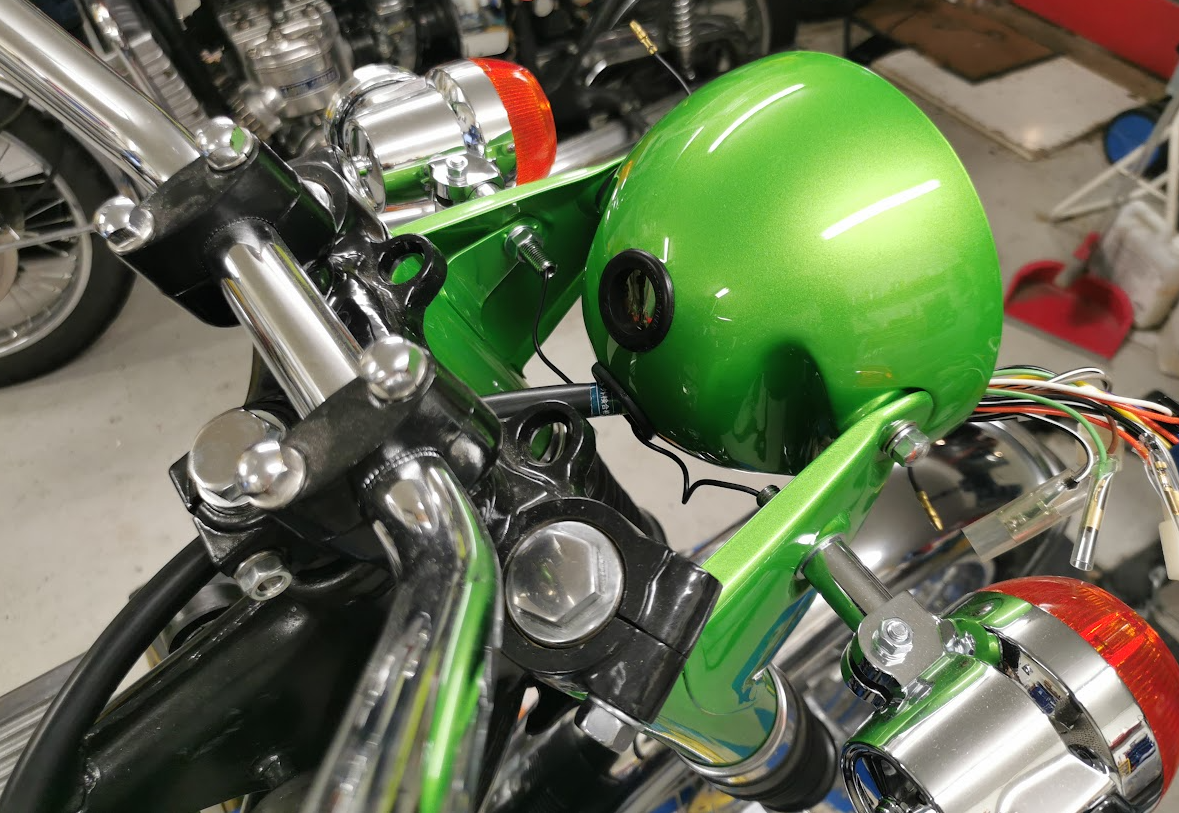
For the rear lamps the GND is not any issue. The indicators are mounted direct into the frame.
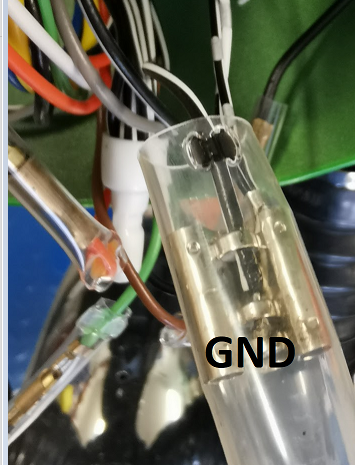
For the front indicators it’s more difficult. On my GT750A model the head light house is all metal and clamp GND direct to the headlamp bracket. On my GT380J it’s different. To make a proper grounding I solder wires to copper spacers and they were both connected to the GND wires inside the head light.
Wires from the spacers connected to GND.
Green wire (right indicator lamp) Black wire ( left indicator lamp)
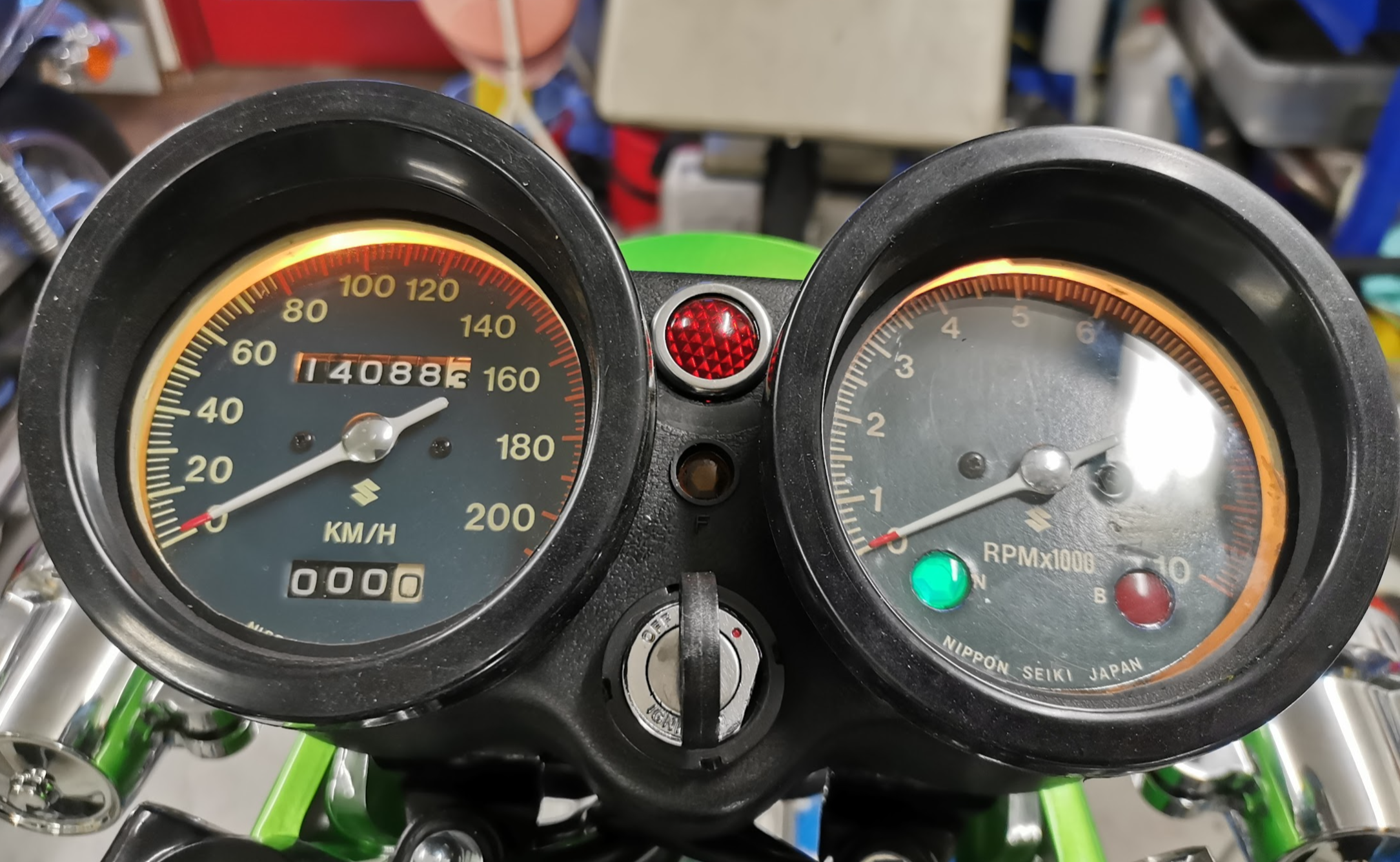
All indicators worked fine, + the instrument lamp as well 🙂
Looks like all of the electronics are working fine without any smoke 🙂
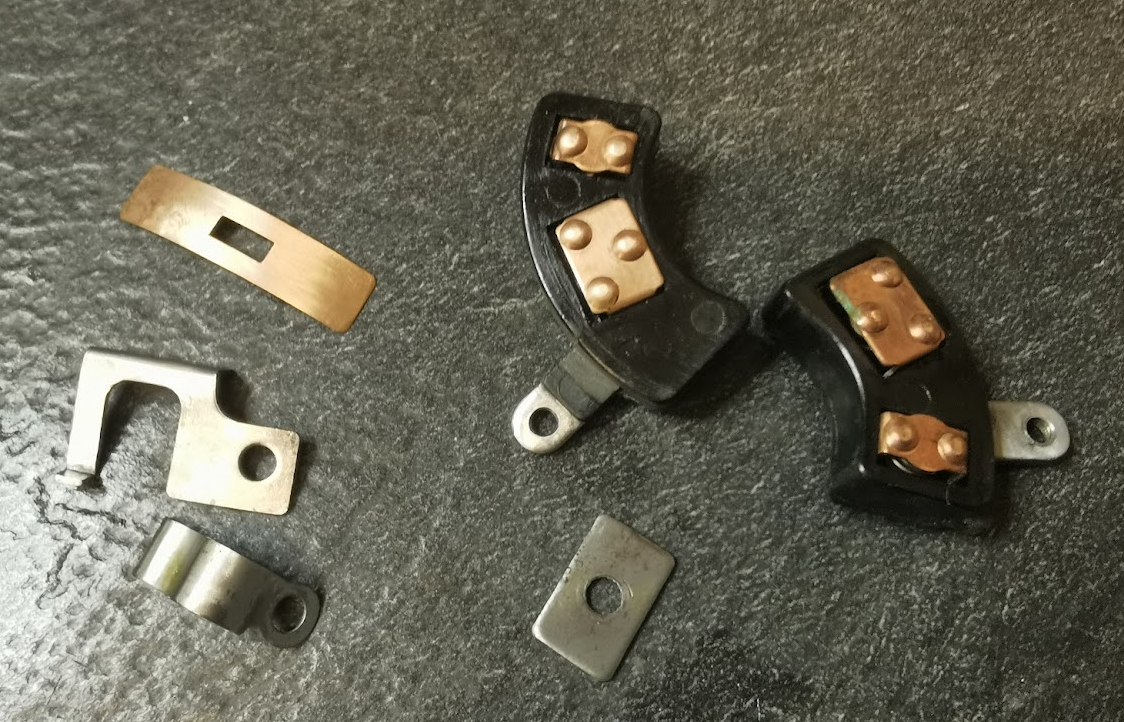
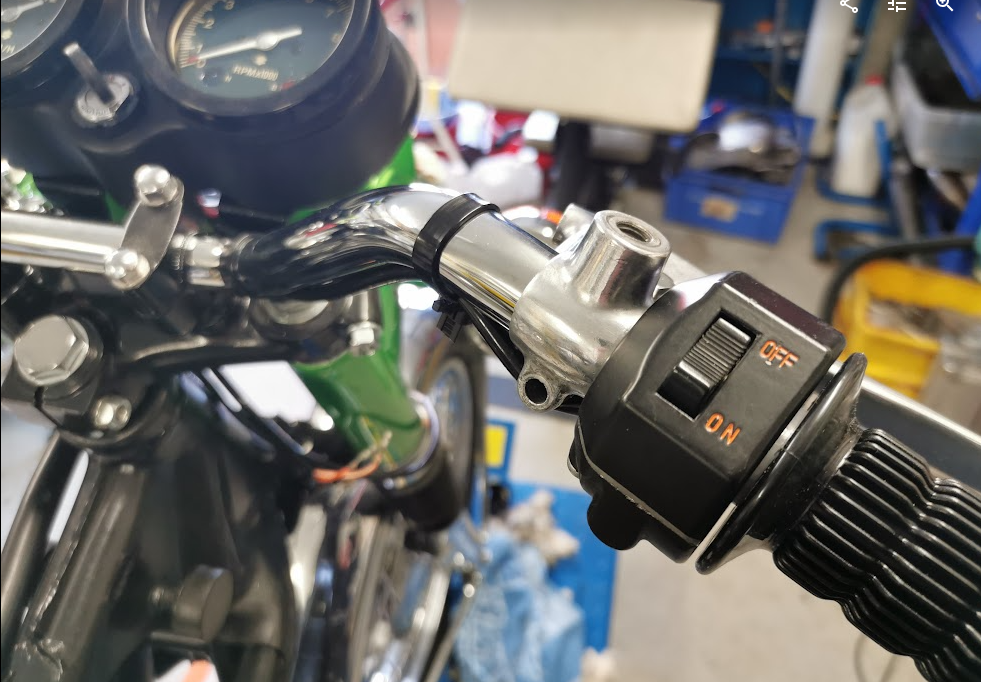
This is what I had. Two right hand switches (one old and one new ) + one old left hand side switch.
Decided to mount the new one and restore the right hand side switch.
The overhaul process:
Important step: Take a pictures before disassembling the parts. Note, the clip shown by the arrow is mounted the wrong way. In that position it will short the headlight high beam to GND.
Primer painting.
Black paint + text painting.
Cleaning and polishing all electrical parts:
Wires:
Lower part switch assembled:
Upper part switch assembled:
Almost done:
Mounted:
Done: Made a 9 pins connector to fit the wiring harness in the headlight.
On the J-model all wires are connected with individual connectors as shown in the diagram below.
On the wiring loom I bought brand new, it’s different. One blue 6-pins connector + two separate connectors for the speedometer lamp and the tachometer lamp.
Since I have all the tools to make the mating connectors I decided to make a new wiring loom for the lamps. The old one was anyhow in a bad shape, but what about the rubber sockets for the lamps?
Was able to buy metal part of the sockets and designed the rubber parts in two pieces, 3D printed them using rubber resin and mounted it all together.
The photos below shows the process:
3D printed rubber parts:
Connectors:
Old and new. Will use standard bulbs, not the LED type as shown in the picture.
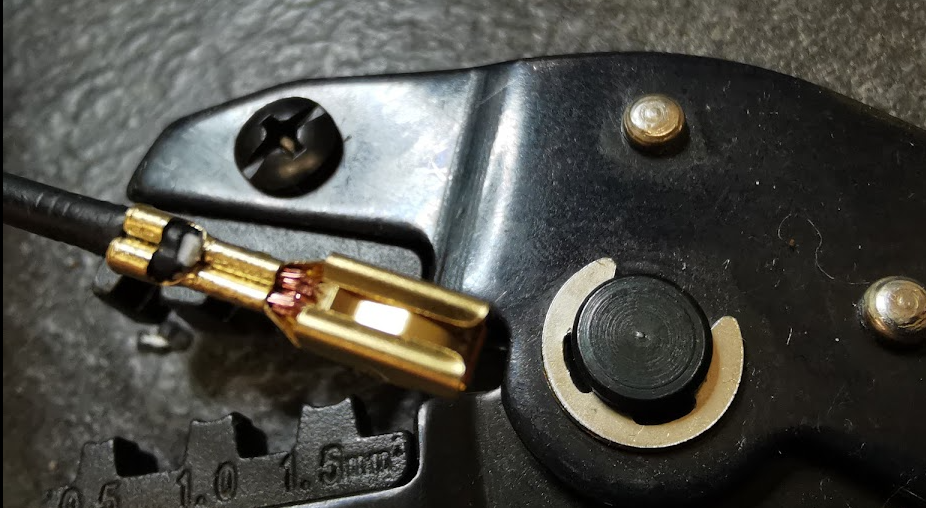
Crimp tool:
The picture above shows the lamps with the correct color coding. I used a very soft multi strand wire, but was not able to find the black/ white type. You have to be true to the color coding so I painted a white stripe onto the black wire.
The wiring loom will be wrapped using a flexible textile tape. That gives a solid but flexible wiring loom, easy to be fitted.
Time to start the assembly process, four years after it was taken apart. The following days and weeks will show if I miss something. Some parts have already been 3D printed new or bought new.
Starting with the bracket:
All the rubber parts where stripped off and I think all of them can be reused. The bracket got sandblasted and painted.
Remounted the greenhouse tent I used when painting the frame. Ready for new paintworks to be done.
First one layer of primer.
Then, two layers of paint.
The tent will soon be upgraded with ventilation since it will be used for bigger parts as well. An oven gave a nice temperature inside the tent.
Rubber parts mounted.
The paint finish could have been better. Perhaps I had to high temperature while spraying? I don’t care since this is a non visible part, covered by the clocks. Now it’s well protected against rust.
Inner parts were painted and glued to the mounting plate.
The rubber hose was made from an old rubber tube.
I made a test fit using the new 3D printed part and also cut a new glass …. but not sure.
Ended up using the old ones from 1972. They have some cracks but seems to fit well after all.
Mad a rubber seal from the old rubber tube and glued onto the cutout in the speedometer housing.
Note! Previous owner has made an ugly cut out to be able to fit the speedometer. That’s not needed if you mount the speedometer without the rear metal disk. Thereafter you mount the disk. But now it’s done I don’t care.
On this part I used textile tape instead of rubber.
The clocks need to be glued to the inner housing. I prefitted to the bracket and made a mark to be sure it’s all aligned before gluing.
Glued and all the lamps are mounted ( and tested)
The upper rubber covers are quite loose and will be glued before I get the bike on the road.
the red lamp in the middle was meant to give a signal above 80km/h and is not in use. I will use it as an indicator to alarm if I forget the retrack the side stand.
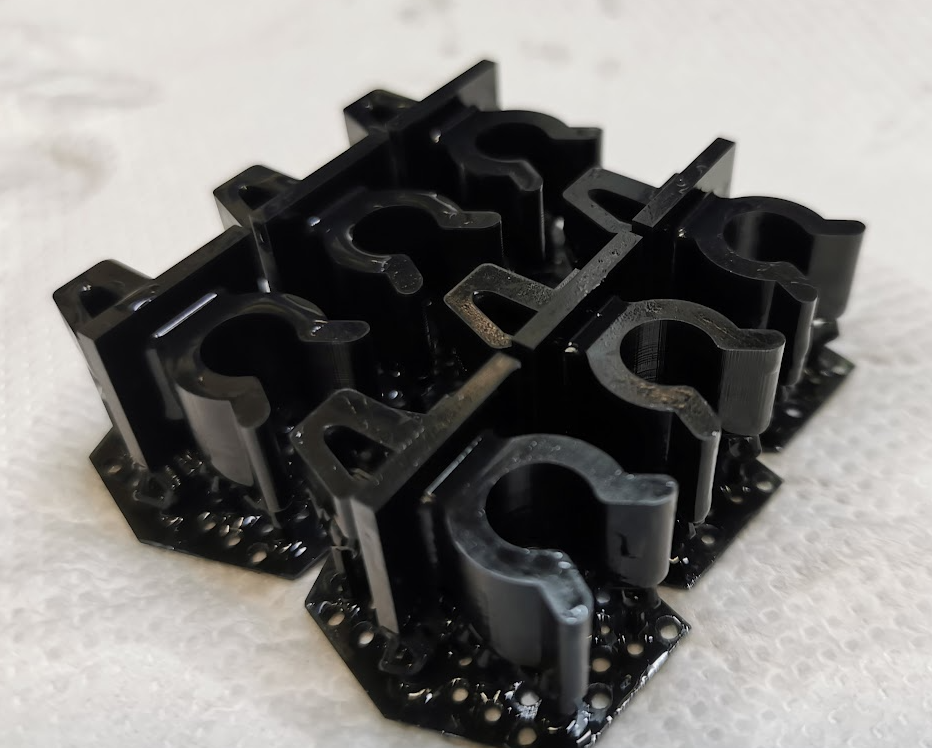
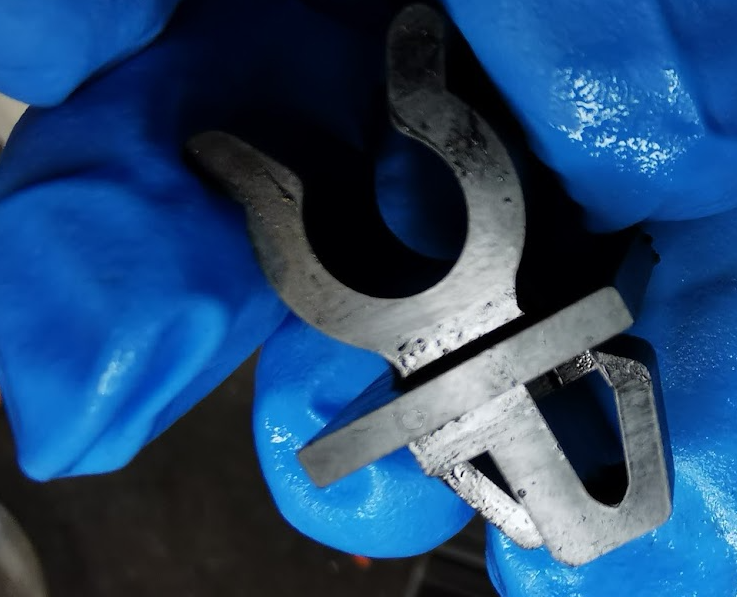
Two of the old clips were broken and new parts are still available for buy. Will cost time and money to buy and since it’s fun to make my own parts, why not give it a try? The model was done in Fusion 360 and the first set of six parts were 3D printed with black resin.
The parts looks stunning, but the function of the flexible clips were not good enough. Too fragile and got easily broken. Another type of resin must be used for this type of parts. I can use my rubber resin, but I will order some ABS like resin and give it another try.
The model drawing in Fusion 360
The STL file of the part can be downloaded for free for anyone:
This post will be updated with the result of the ABS flexible resin print when it’s done. The same if I do a rubber resin print of the part. The ones I made worked fine, but as mention above they all looked fragile and some broke when mounted into the frame.
New updates: The file above is now updated to V2 release and will fit better into the frame. The new printed part using ABS like resin was also much better.
How to start: All parts were dismounted and cleaned. I was not able to clean the coils properly so I decided to paint them white.
The metal brackets holding the cables were sandblasted and nickel plated.
I had to use impact driver to loosen the screws. Don’t forget to use JIS tools ( Japanese Industrial Standards)
The bracket was sandblasted and polished.
All of the wires had to be extended or replaced. Each individual strand in the wire must be sanded before soldering. After soldering the joint was covered in epoxy and painted.
The other end of the wire got new terminal and was crimped.
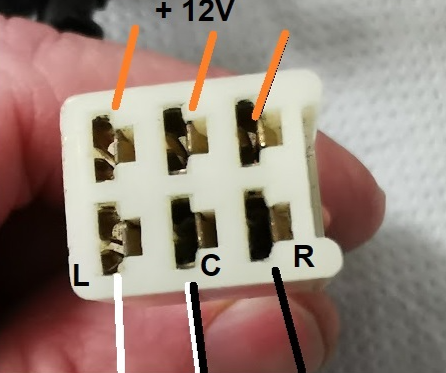
This is the color coding and placement of the wires into the connector.
The orange wires are all connected to a common +12 supply and the placement on the upper row does not matter. On the lower row, it’s very important to do it right, if not the bike will misfire on wrong cylinders.
Mounted with new wires and connector.
Before mounting I also did a spark plug test to verify all of the coils. Connect 12V to the orange wire and short the other wire to GND( 0v). The body of the spark plug must also be grounded. When you release the wire from ground the park plug will fire. ( Just tap the wire on/off to GND and you will see the spark) Do the same on all coils to verify the function.
The resistance in the coil winding should be around 4,5 ohm. The current in each coil when grounded will therefore be 12V/ 4,5 ohm= 2,7 Amp. That’s the reason why you drain the battery very fast when leaving the ignion on and the bike is not running.
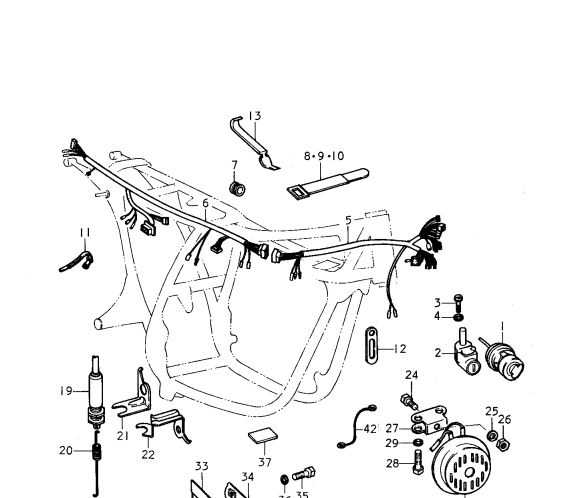
According the the parts manual it looks like the wiring harness should be installed on the right side of the bike, or… not, right side must be wrong. I’m told it right is right, but based on feedback with images I have only got photos from GT380 owners with the wiring harness on the left side of the frame, and it’s the same on my GT750 too. The drawing above must a guidance of how the wiring are connected, not which side it’s fitted.
Based on photos I have got I have some idea about how it should be done. Some advice can also be found on YouTube, but you can’t trust them. Some might be right and some are wrong, and others are horrible wrong.
So, to summarize: I’m not sure, and in some case I don’t have a clue, but I have to start and will use common sense when I have to make decisions. I think a look at mye GT570 will be at a good help. As long as I make it all in compliance with the wiring diagram it should be fine.
Connectors and tools:
I bought a kit from China with a lot of different type of connectors + the crimping tool needed.
In addition I got hold of the upper and lower wiring harness and only need to make some few extra cables to fit into the harness.
The cable from the alternator is already done, please see my previous post. The same for the cable from the ignition electronics (the points )
Next up was the battery cable. That became a bit tricky. Was not able to find the old cable anywhere and how to make a new one. The corresponding connector is made of rubber and how can I make that ? Same procedure as before. I drew the part in Fusion360 and fired up my 3D printer with rubber resin. And here is the result:
I found a picture of the cable on internet and did the measurements on the mating connector from the wiring harness. After printing the part I glued the terminals and added heat shrink to the wires.
The STL file for printing can be downloaded for free:
I inserted the main cable for the upper harness through the lower hole in the headlamp and the upper hole will go to the clocks and and switches on the handlebar. I will use adjustable cable ties for clamping the cable onto the frame so I can easy move and do changes as I continues with the wiring.
That’s enough for today. Will continue another day 🙂
Another day:
Still winter in Norway and I will spend some time in the Man Cave to do some wiring:
Still not sure how to lay down the wiring, but I give it a try and use reusable zip ties for an easy adjustments.
Head lamp wiring loom:
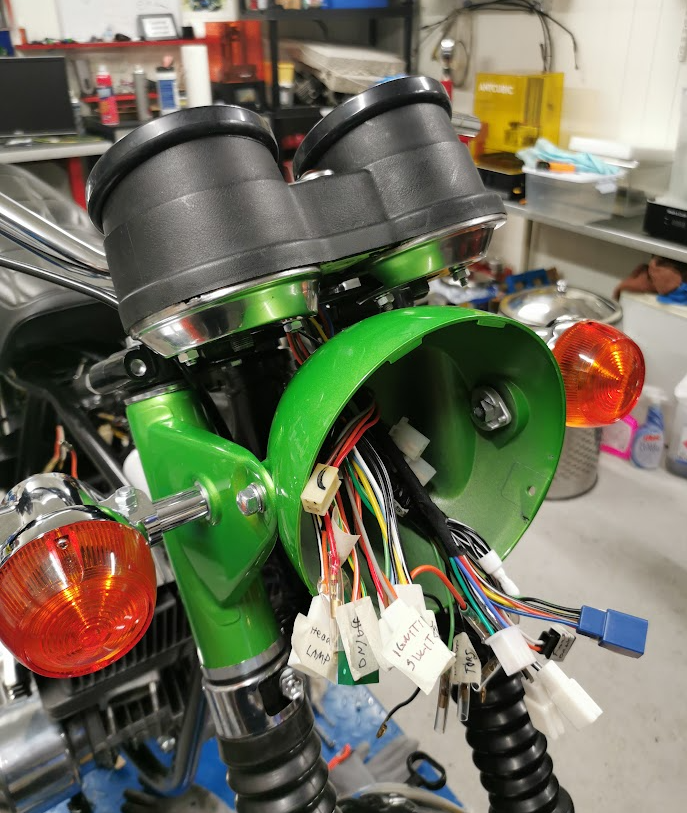
Pushing all the wires back into the headlight house to free up as much space as possible. Will be a tight fit later on when the headlight shall be mounted.
Hmm, something is wrong… The blue connector is not part of the schematics. Can it be for a later model with gear indicator ? No, the color code is different.
Some minutes later: Mystery solved, see the picture below:
The blue connector is for all of the small lamps in the clocks. According the the schematic it should be individual connectors, not a common one for all of the lamps. Anyhow, now I know how to do the wiring. It’s more easy too with one 6-pins connector, but why is it not part of the wring ?
Phuu, for a while I thought the main wiring loom was wrong. Well, a bit wrong. It’s not the wiring loom for the J-model and not for the latest ones either. Not a big deal since I know how to wire it and have the tools and parts to make the mating connectors.
Instruments bulbs:
One of the bulbs sockets looks horrible, and the wiring is in a bad shape as well.
I think I order new sockets and make a complete new wiring. If so,I have to 3D print the rubber cover too.
When it’s done, it will be a separate post about how I did it. I can’t put this old and ugly bulb loom back into the lovely bike.
Clamping to the frame:
Photos from the wiring layout:
Tried to lay the wiring close to the frame away from the air filter and other parts to be mounted later.
The wiring loom is quite stiff and to avoid too much bend I ended up laying down the cable as the picture shows. Probably not like the original, but I think this will work fine. But doing so, the fuse holder will fit better on the right side, close to the tool box, but why not?
I will 3D print a bracket for the fuse holder. The fuse holder is not the original, but close to. A 20A fuse.
Grounding:
Make sure the threads are clean without any paint to ensure a proper grounding.
Less questions, all the wiring are now sorted out :
The upper wiring loom I bought deviate from any standard GT380 wiring, it has some extra connectors. Extras:
In addition to the 6-pins blue instrument lamps connectors there are two connectors with Gray and Black/white wires. for instruments lights ( tachometer and speedometer light)
One red wire with +12V, direct from the battery + pole and one extra GND wire. Can be used for alarm system or a charge port to the battery.
One green/yellow wire in the same connector going to the ON/OFF switch. Not in used for my J-model.
One brown wire. The same wire as going to the tail lamp. This wire will also be at power it the ignition switch is turned to parked position.
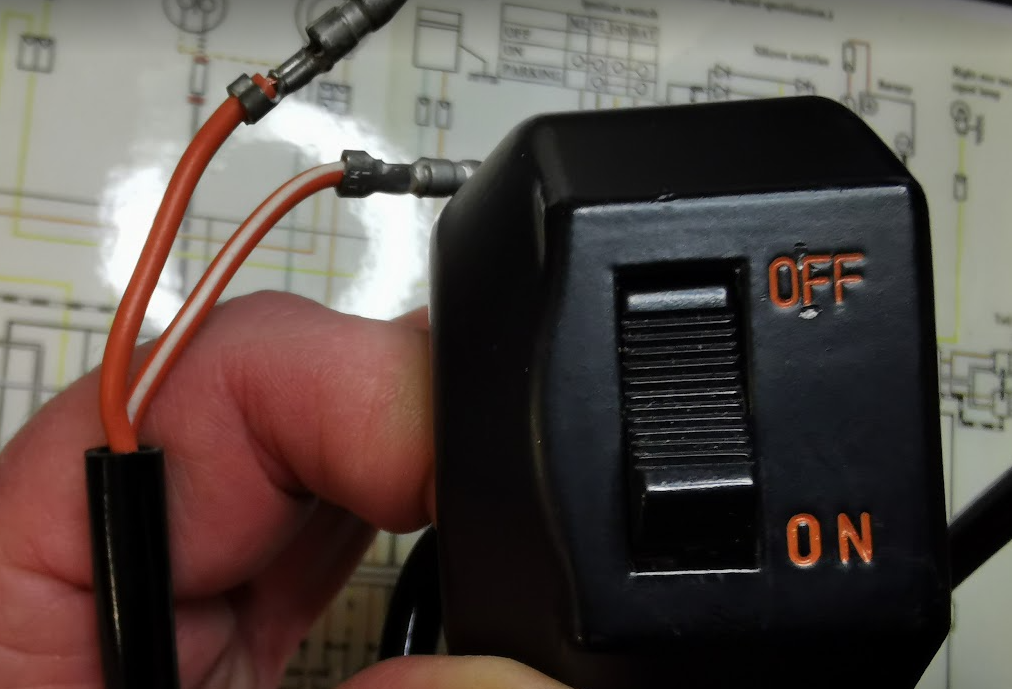
On/off switch:
The on /off switch is a bit difficult to spot on the wiring diagram, except from the GT380B wiring. The color code is quite simple. Orange is the +12V after the ignition switch (red before the ingnition switch). The orange/white is the +12V to the coils and the bike will of course never run if this switch is turned off. According to the GT380J wiring it’s the orange/white wire changes to solid organge from the switch connector and down to the coils, but not on later models. A bit annoying and I’ve seen several variants of the J-wiring diagrams. Not easy to know what is correct.
A summary of the color codes:
Red (R): The +12V from the battery through the 20A fuse.
Orange (O): +12V after the ignition switch
Orange / white (O/W) 12V + after the ON/OFF switch. Turn on /off the voltage to the coils. Note! only orange wire on earlier models (According to the schematics)
White (W) : Brake lamp wire.
Brown (BR) Tail lamp.
Gray (GR) Instruments lamps
Blue (BL) Neutral position switch. The indicator lamp will light if the wired is shorted to ground.
Light Green (LG) Right indicator lamp.
Black (BK) Left indicator lamp.
Black/white (BK/W) GND (Ground, connected to the frame)
Light Blue (LBL) Turn signal relay wire.
Yellow in the rear wiring (Y) 3 phase AC voltage
Yellow in the front wiring (Y) High Beam Head Lamp.
Note: The Gray and Brown wires will be shorted by the ignition switch in run position and both the indicators lamps and tail lamp will light (if the main light switch is on). If the ignition switch is left in parked position the orange and brown wires are shorted and the tail lamp will light (regardless of the main light switch).
For about two months ago I tested several oil pumps in the test jig I made. I decided to go for the early version of oil pumps with suction. That was the one giving best result when idling. I got scared about the others giving little or noting at low throttle.
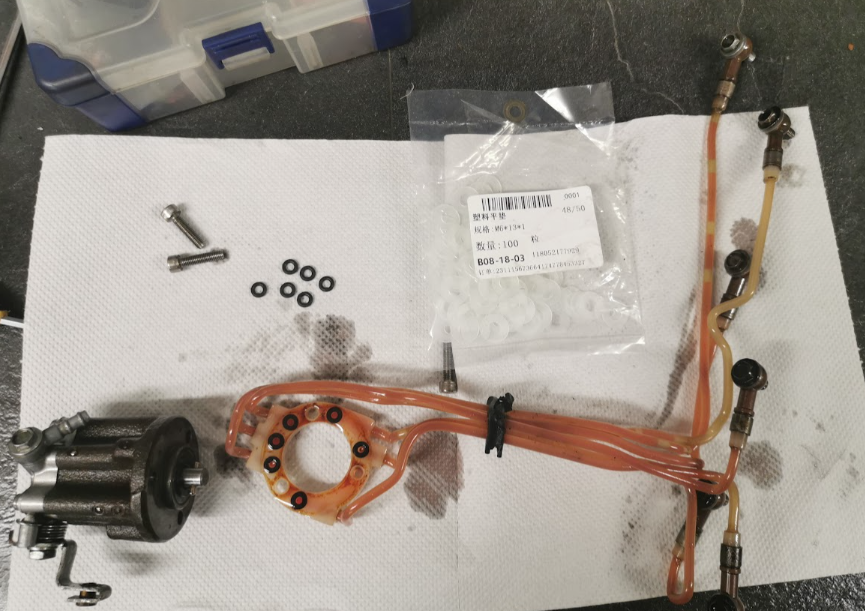
All o-rings were replaced and the same with the nylon spacers.
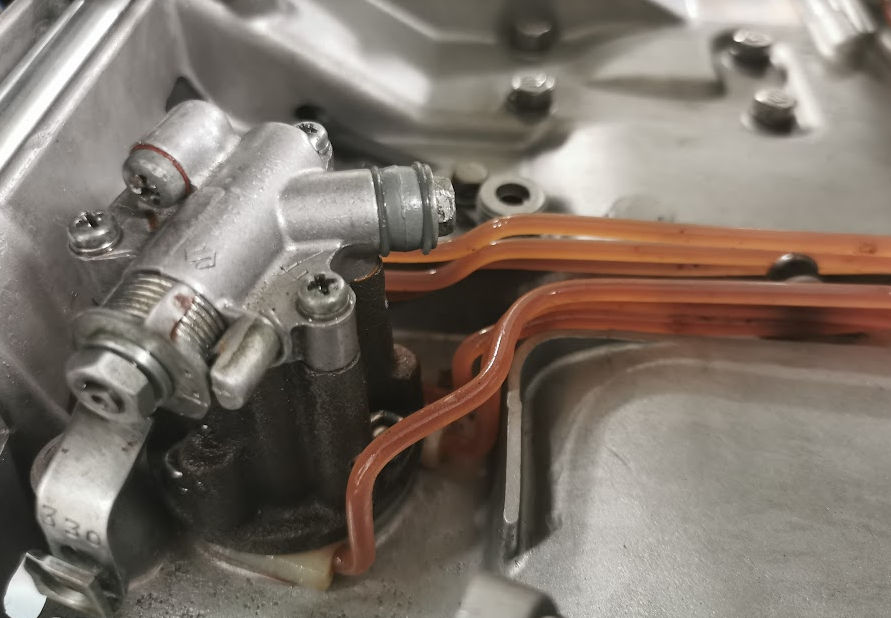
The 50 years old plastic and the oil-lines are very fragile, and I didn’t do much to clean or make it look nice. I knew it all worked since I had it in the test jig with good results. To drive the plastic base all the way down I prefitted the screws for holding the oil pump.
Torque settings for the banjo bolts is difficult to find. I did some investigation back in 2016 when rebuilding my GT750A and found a number of 2,5Nm. That’s lower than I today have on my smallest wrench. At that time I stole a key from my work, but this time I used common sense and was gentle to the bolts.
By using a syringe I was able to inject the oil all the way to the end of the pipes.
I have the original screws for mounting the oil pump, but I went for 5mm bolts with hex head instead. Much more easy to mount and the screw are not visible when the covers are on.